

Domestication of Corporation & LLC | Transfer Business From One State To Another In USA
We help businesses complete Domestication of Corporation and Domestication of LLC filings smoothly while helping owners Transfer Business from One State To Another legally and efficiently.
Whether you want to transfer business to another state online or move your company for tax, operational, or expansion reasons, our team helps simplify the process.
- Prepare & File Domestication Documents
- Transfer LLC or Corporation to Another State
- Maintain Business Continuity & Compliance
- State-to-State Business Migration Support
- Update Business Registration Records
- Fast Multi-State Filing Assistance

Why Businesses Transfer Company from One State To Another
Businesses relocate to another state for many operational and financial reasons.
1. Lower State Compliance Costs
Some states offer lower annual fees, taxes, or reporting requirements for LLCs and corporations.
2. Better Business Laws
Business-friendly states may provide stronger privacy protections, flexible regulations, or improved legal structures.
3. Business Expansion
Companies expanding operations often transfer registration to states where they actively operate or manage business activities.
4. Tax Planning
Some businesses relocate to states with more favorable tax environments or simplified compliance systems.
4. Operational Convenience
Business owners may move the company closer to their primary operations, employees, or management location.
Understanding The Basics Before You Domesticate Corporation & LLC From One State To Another State

What Is Domestication of Corporation?
Domestication of Corporation is the legal process of transferring an existing corporation from one state to another without creating a completely new business entity.
Instead of dissolving the old company and starting again, domestication allows the business to continue operating while changing its state registration legally.
Businesses commonly choose domestication to:
- Relocate operations
- Reduce compliance costs
- Access business-friendly laws
- Expand into another state
- Simplify taxation or reporting
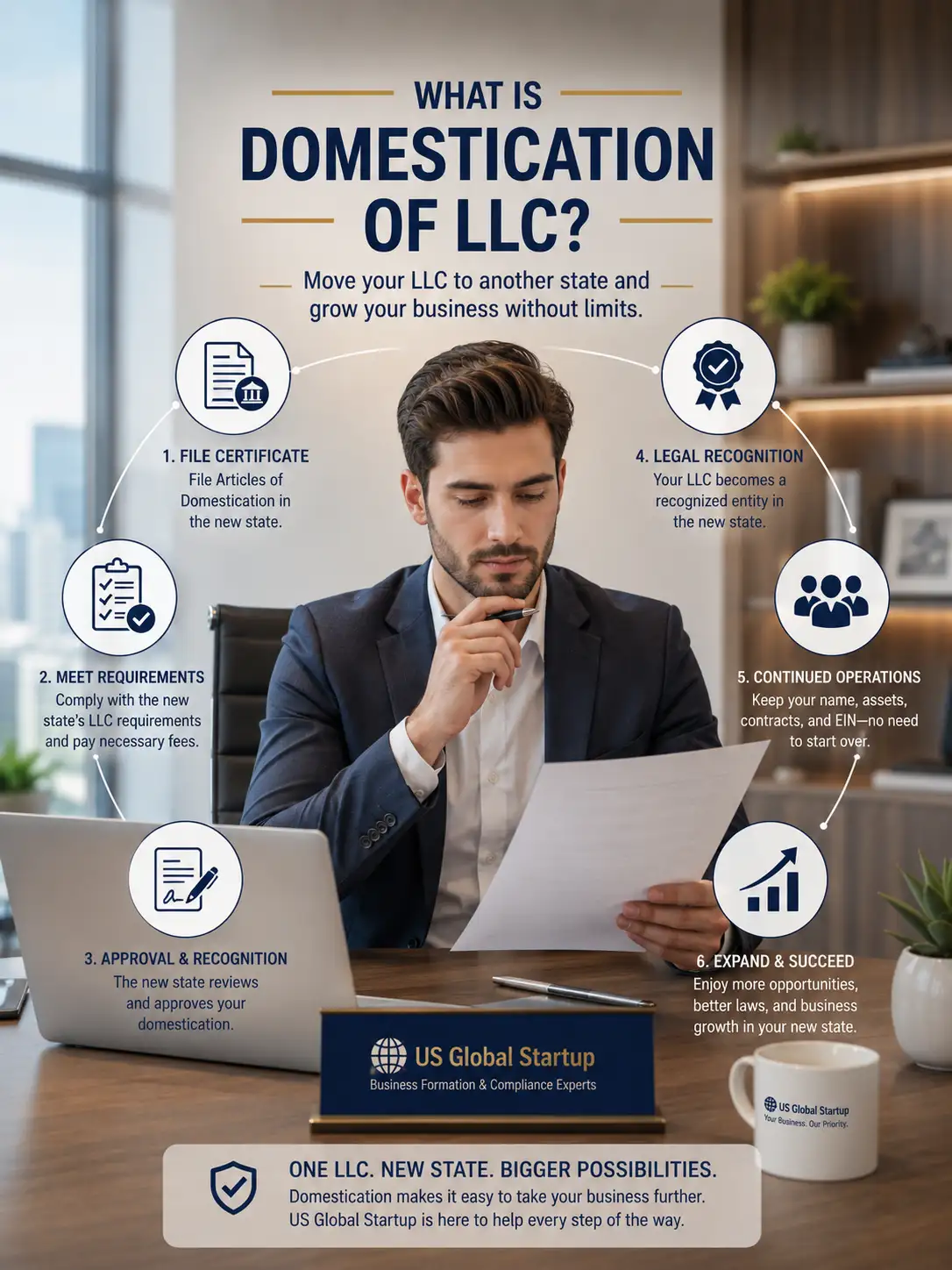
What Is Domestication of LLC?
Domestication of LLC allows an LLC to legally move from one state to another while maintaining the same business entity structure.
Many LLC owners use domestication when:
- Moving business operations
- Expanding into another state
- Seeking lower annual fees
- Improving privacy or tax structure
- Simplifying long-term compliance
Domestication of LLC is often preferred because it helps avoid forming a completely new company.
Growth Plan
- Articles of Domestication Filing
- Certificate of Conversion Filing
- Preparation of Domestication Documents
- Filing With Secretary of State
- Email & Chat Support
Costs Involved in Domestication of Corporation & LLC
The total cost for Domestication of Corporation or Domestication of LLC depends on the states involved, filing requirements, and processing speed selected.
Planning the transfer properly helps businesses avoid unexpected compliance or filing expenses later.
1. State Filing Fees
Every state has different domestication and business transfer filing fees.
| Filing Item | Estimated State Fee |
|---|---|
| Domestication Filing | $50 – $500 |
| Certificate of Good Standing | $10 – $50 |
| Expedited Processing | $25 – $200 |
The final fee may vary depending on the business structure and destination state.
2. Professional Service Costs
Some businesses choose professional support to help Transfer Business from One State To Another smoothly and compliantly.
- Professional services may include:
- Domestication filing support
- Registered agent updates
- Compliance guidance
- Business record updates
- Tax filing assistance
While some businesses file independently, US Global Startup can help reduce filing mistakes, delays, and multi-state compliance issues.
Domestication Services for Non-Residents
We also help international founders and foreign-owned U.S. businesses transfer company registration remotely.
- We help:
- Non-resident LLC owners
- Foreign-owned corporations
- E-commerce businesses
- Amazon FBA sellers
- Agencies & startups
If you are sure about moving your business to another state, you may also need to change Registered Agent for LLC and Corporation and US Global Startup can help you with the complete process smoothly and hassle-free.
Benefits of Domestication of Corporation & LLC
Transferring your LLC or corporation to another state can help improve compliance management, reduce operational costs, and create better opportunities for long-term business growth.
Simplified Compliance
Reduce multi-state compliance stress by simplifying annual filings, reporting requirements, legal paperwork, and ongoing business maintenance tasks.
Lower Business Costs
Moving to a business-friendly state may help reduce franchise taxes, annual fees, and long-term compliance expenses significantly.
Better Growth Flexibility
Business domestication provides flexibility for expansion, stronger legal protection, improved tax efficiency, and better investment opportunities.
Difference Between Domestication and Foreign Registration
| Domestication of Business | Foreign Registration |
|---|---|
| Transfers the company legally to another state | Keeps original state registration active |
| Changes the home state of the company | Operates in multiple states |
| Often reduces duplicate compliance | Additional annual reports may apply |
| Useful for permanent relocation | Useful for expansion into other states |
Understanding the difference helps you choose the right option for your business. If foreign registration is more suitable than domestication for your situation, we also provide Foreign Registration service in USA to help you register your existing business in another state.
Document Required To Transfer Business From One State To Another In USA
Documents Required For Domestication of LLC
- To transfer an LLC to another state through domestication, businesses usually need only essential legal and compliance documents.
1. LLC Name
Your LLC name exactly as registered with the original state.
2. Original State of Formation
The state where your LLC was originally formed and currently exists.
3. New Domesticated State
The state where you want to transfer or domesticate the LLC.
4. Articles of Domestication
Official domestication filing document submitted to the new state.
5. Certificate of Good Standing
Proof that the LLC is active, compliant, and has no pending state issues.
6. Articles of Organization
Some states require new LLC formation documents along with domestication filings.
7. Operating Agreement Updates
Updated LLC Operating Agreement reflecting the laws of the new state.
8. Member Approval Documents
Written consent or resolutions approving the LLC domestication process.
9. Registered Agent Information
Details of the registered agent located in the new state.
10. Tax Clearance Certificate
Certain states require proof that all LLC taxes have been paid.
Documents Required For Domestication of Corporation
- To domesticate a corporation into another state, businesses generally need corporate governance and compliance documentation.
1. Corporation Name
Your corporation name exactly as registered with the current state.
2. Original State of Incorporation
The state where the corporation was initially incorporated.
3. New Domesticated State
The state where the corporation will continue operations after domestication.
4. Articles of Domestication
Legal filing requesting approval to transfer the corporation to another state.
5. Certificate of Good Standing
Certificate confirming the corporation complies with state requirements.
6. Articles of Incorporation
Some states require new incorporation documents during domestication.
7. Corporate Bylaws Updates
Updated bylaws adjusted according to the laws of the new state.
8. Board Resolution & Shareholder Approval
Official approvals authorizing the corporation domestication process.
9. Registered Agent Information
Details of the corporation’s registered agent in the new state.
10. Tax Clearance Certificate
Proof that corporate taxes and filings are current and compliant.
Step By Step Process To Transfer Business To Another State Online
Step 1
Business Eligibility Review
We review your company structure and confirm whether the current and destination states allow domestication filings.
Step 2
Prepare Domestication Documents
Required domestication and state transfer documents are prepared according to state filing requirements.
Step 3
File Transfer & Domestication Documents
The business domestication filing is submitted to the appropriate state authorities for approval.
Step 4
Update Compliance & Business Records
Businesses may also require updates for tax records, registered agent information, or business addresses.
Step 5
Receive State Approval Confirmation
Once approved, the company officially continues operations under the new state registration.
You can also review guidance from the U.S. Small Business Administration.
States Commonly Used for Business Transfers
Not every business change requires a formal amendment. However, some modifications legally require state approval.
1. Change the LLC Name
Many businesses choose domestication when moving to business-friendly states.
- such as:
These states are popular because of flexible business laws, lower fees, or operational advantages.
2. States That Restrict Domestication
Some states still don’t support domestication directly.
- In those cases, businesses may need to:
- Register a New Company
- Merge the old company into the new entity
- Dissolve old LLC or Corporation
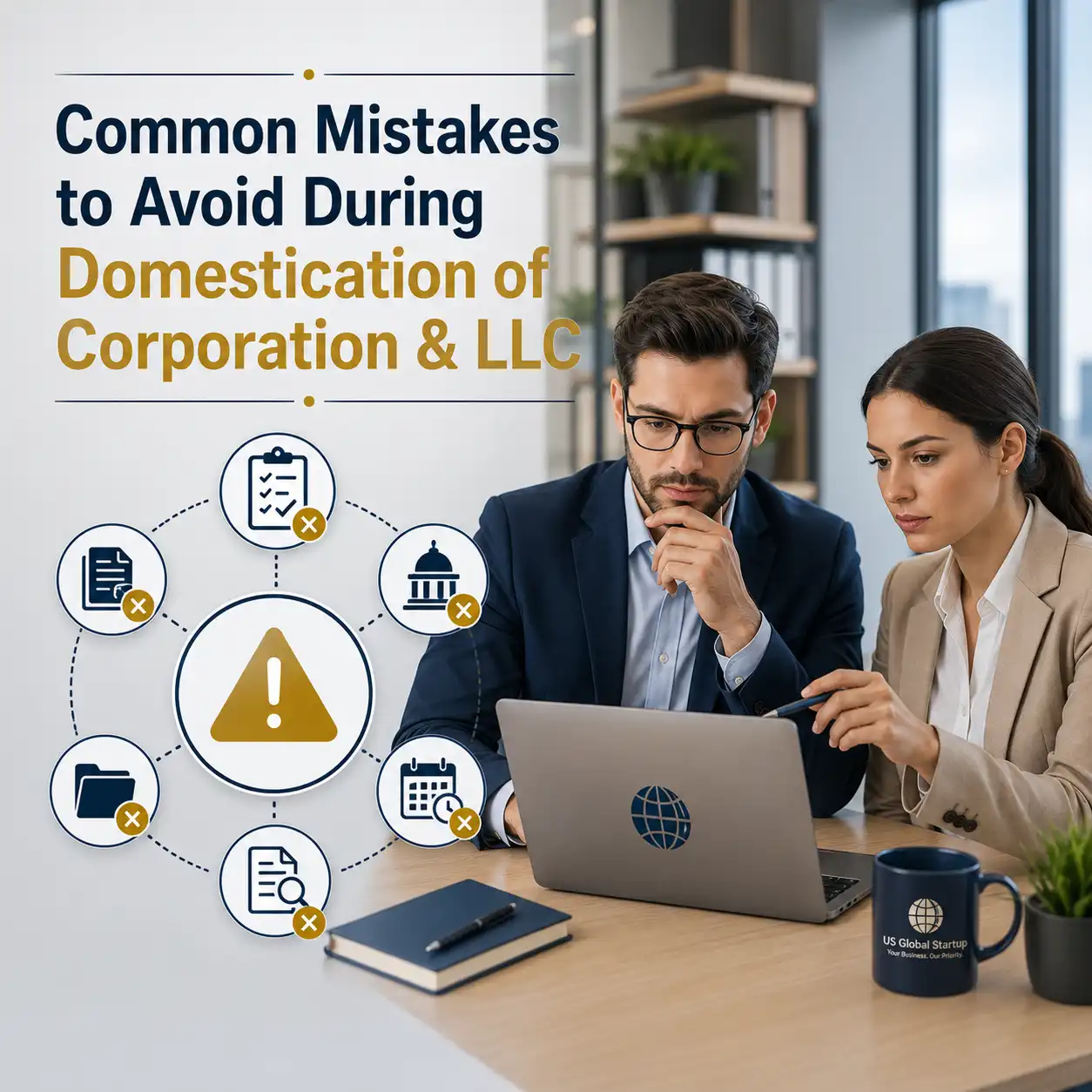
Common Mistakes to Avoid During Domestication of Corporation & LLC
Even experienced business owners can face unnecessary delays during the domestication process.
1. Incorrect Documentation
Errors in company details, signatures, or addresses often lead to application rejection delays.
2. Using an Incorrect Registered Agent in New State
Providing invalid registered agent details may cause rejection of your domestication application immediately.
2. Tax Registration Errors
Businesses sometimes forget to update:State tax accounts, Payroll registrations and Sales tax permits.That oversight can create expensive tax headaches later.
Common Questions About Domestication of Corporation & LLC
Can I Transfer a Business From One State to Another?
Yes, many LLCs and corporations can legally transfer their business to another state through domestication or foreign registration filings.
Do all states allow domestication?
No, some states do not allow domestication filings, so businesses may need alternative transfer methods.
Is domestication better than dissolving and reopening?
In many cases, domestication is simpler because the business entity continues instead of creating a completely new company.
Can Non-US Residents Domesticate an LLC or Corporation?
Yes, non-US residents can transfer their LLC or corporation to another state through the domestication process.
Do I need a new EIN after domestication?
In many cases, businesses can keep the same EIN, but IRS updates may still be required after state transfer.
Will My Registered Agent Change After Domestication?
Yes, businesses usually need a registered agent in the new state after domestication to maintain legal and state compliance requirements.
Will my bank account change after domestication?
Usually no. Most businesses can continue using the same bank account after successful domestication and updated business records.
Do I Need to Close My Old Company After Domestication?
In many cases, the old state registration is discontinued automatically after successful domestication approval.
Will My Business Name Stay the Same After Domestication?
Usually yes, but the business name must be available and approved in the new state before transfer.
What if My Business Name Is Taken in Another State?
If your business name is unavailable in the new state, you may need to choose a different name or file for an alternate business name registration.
Does Domestication Affect Existing Business Contracts?
Most contracts remain active after domestication, but businesses should update state records and legal information when required.
How Much Does It Cost to Relocate a Business?
Business domestication costs vary by state and usually include state filing fees, registered agent fees, and compliance document charges.